



 中文简体
中文简体 English
Biological Reagents Series Factory
Cell culture is one of the commonly used experimental techniques in biological research, and cell culture reagents are essential chemical substances for conducting cell culture experiments.
These reagents play important roles in the cell culture process, including providing nutrients, maintaining the cell growth environment, and promoting cell proliferation. The nutritional requirements for in vitro cell culture are similar to those in the body, which means creating a culture environment similar to the organism to ensure the authenticity, effectiveness, and reproducibility of experimental results. we offer a comprehensive range of high-quality reagents and services for primary tissue isolation, culture, passaging, and the culture and analysis of various cell lines.


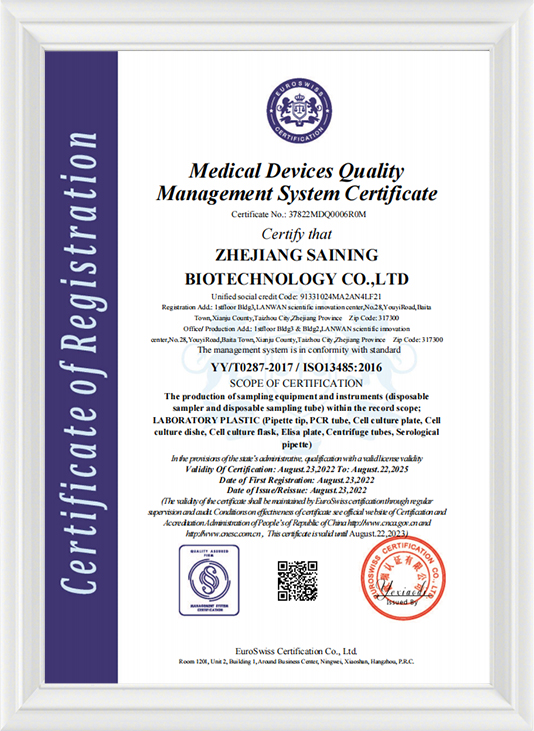
Since its establishment, the company has developed rapidly and now has a 100,000-level purification workshop of 15,000 square meters, a factory area of 30,000 square meters, a Suzhou technology research and development center, a Suzhou production base and a Taizhou production base. The main products include cell culture, biological detection liquid processing, medical equipment, safety protection, etc., which can be widely used in testing institutions (IVD), biological research, medical treatment, new drug research and development, laboratory scientific research and other fields. The product has performance and high quality. After testing by third-party testing agencies and relevant scientific research units, it has the ability to replace high-quality imported products.





-
A pipette rated for 1 mL and one rated for 3 mL might look nearly identical sitting side by side in a supply cabinet, ye...

-
Sterile Disposable Loops are single-use laboratory consumables used to transfer small amounts of microorganisms between ...
Biological Reagents Series Industry Knowledge
Biological Reagents Series: Foundations of In Vitro Diagnostics and Research
The Biological Reagents Series encompasses a broad range of products — from enzymes, antibodies, buffers, and culture media to reagents for molecular assays and cell‑based tests. These reagents form the backbone of in vitro diagnostic (IVD), medical research, and laboratory workflows. Their quality and consistency influence experimental reproducibility, diagnostic accuracy, and regulatory compliance.
In modern laboratory settings, biological reagents support applications such as nucleic acid amplification, immunoassays, cell culture, and protein analyses. For example, enzymes like polymerases or reverse transcriptases are essential for PCR-based diagnostics; antibodies enable detection of biomarkers; culture media sustain cell viability for drug screening or toxicity testing. As a manufacturer, ensuring batch-to-batch consistency, sterility, and correct formulation is critical.
When sourcing or producing biological reagents, key considerations include purity, stability, sterility (where applicable), and shelf life under specified storage conditions. Each reagent often requires detailed documentation — such as Certificate of Analysis (CoA), storage instructions, handling precautions, and batch traceability. These documents support both internal quality control and external regulatory audits, which are especially important for reagents used in clinical diagnostics or regulated research.
Finally, because biological reagents may be sensitive to temperature, light, or freeze–thaw cycles, packaging and logistics must guarantee integrity. Proper cold‑chain management, protective packaging, and clear labeling are essential to preserve reagent performance from factory to end user.
Lab Consumables & Reagents: The Unsung Backbone of Laboratory Workflows
The term Lab Consumables & Reagents covers a broad category — including pipette tips, sample collection tubes, centrifuge tubes, microplates, serological pipettes, sterile loops, filters, and storage vials, in addition to reagents. Although consumables may appear mundane compared to high-tech reagents or instruments, they play a crucial role in ensuring sample integrity, preventing contamination, and maintaining experimental reliability.
For example, using high-quality sterile pipette tips prevents cross-contamination when handling sensitive biological samples. Similarly, properly manufactured sample collection tubes and storage vials help maintain sample conditions — pH, sterility, or temperature — and thereby preserve analyte stability, which is vital for downstream assays or long-term storage.
Consistency in the quality of consumables also reduces variability introduced by non-reagent factors. For experiments requiring high precision — such as quantitative PCR, ELISA, or cell culture — even minor differences in plastic composition, manufacturing residuals, or sterility can affect results. Therefore, strict quality control and material testing (e.g., for leachables, sterility, endotoxin levels) are necessary steps in consumables production.
Moreover, labeling, traceability, and user convenience are also important. Clear graduations, secure sealing caps, sterile packaging, and ergonomic design all contribute to efficient lab workflows. For labs engaged in high-throughput screening or clinical diagnostics, reliable consumables are as important as the reagents themselves, because they support operational efficiency, safety, and data integrity.
Biochemical Reagents: Enabling Molecular and Biochemical Assays
Within the broader Biological Reagents Series, Biochemical Reagents refer more narrowly to purified chemicals, salts, buffers, substrates, dyes, markers, and reagents used in biochemical assays. They are fundamental to studies of proteins, nucleic acids, metabolic pathways, enzymatic reactions, and many diagnostic protocols.
Common biochemical reagents include buffer salts (e.g., Tris, phosphate buffer), detergents, reducing agents, metal chelators, substrates for enzymatic reactions, chromogenic or fluorogenic dyes, and reagents for protein quantification or electrophoresis. These reagents must meet high purity standards; impurities or contaminants can dramatically affect assay sensitivity and specificity.
Producing biochemical reagents requires careful sourcing of raw materials, rigorous purification processes, consistency in pH and concentration, and stability under storage. For example, buffers must be correctly adjusted and free from microbial contamination; substrates and dyes must be free from degradation products that could interfere with assays.
For laboratories conducting sensitive molecular or biochemical assays — such as Western blot, enzyme kinetics, mass spectrometry sample prep, or metabolite quantification — reagent quality often dictates data reliability. In addition, consistent batch-to-batch performance and clear labeling (molarity, pH, expiration date) are critical for reproducibility and regulatory conformity.
Integration: Why Categorization Matters for Users and Producers
Grouping products under Biological Reagents Series, Lab Consumables & Reagents, and Biochemical Reagents helps both manufacturers and end-users organize inventory and workflows logically. For users, it simplifies procurement: when they need raw chemicals for a protein assay, they look under “Biochemical Reagents”; if they need sterile pipette tips or collection tubes, they browse “Lab Consumables & Reagents”; for assay kits, enzyme mixes, or culture media, they check “Biological Reagents Series”.
For manufacturers, such categorization supports quality assurance, regulatory compliance, and supply chain efficiency. Each category may demand distinct quality tests, storage conditions, and documentation. By separating them clearly, a manufacturer can maintain focused production lines, tailored quality control protocols, and dedicated logistics handling.
In addition, clear classification improves communication with clients — researchers, clinical labs, or industrial users — making it easier to specify requirements, manage orders, and plan inventory. When documentation, packaging, and storage instructions match the category standards, end-users face fewer errors, less confusion, and achieve better experimental consistency.
Trends and Considerations: Quality, Sustainability, and Supply Chain Resilience
In recent years, laboratories and manufacturers have placed increasing emphasis on quality control, contamination prevention, sustainable materials, and supply chain resilience. These trends affect all three categories:
- Quality control: Growing demand for batch traceability, endotoxin- and pyrogen‑free reagents, validated sterility, and detailed documentation. This is especially important for reagents used in diagnostics or clinical research.
- Contamination prevention: Use of sterile, single-use consumables; improved packaging; contamination‑resistant materials; and clear labeling to avoid cross-use.
- Sustainability: Some customers now prefer consumables made from recyclable or biodegradable plastics, or reduced plastic waste. This pushes manufacturers to explore eco‑friendly materials and recyclable packaging.
- Supply chain and logistics: Because biological reagents and biochemical reagents are often temperature- or light-sensitive, reliable cold‑chain logistics and robust shipping protocols are becoming increasingly important, especially for global distribution.
Manufacturers that implement good quality practices, accurate classification, and robust logistics help end-users maintain consistency, comply with regulations, and reduce operational risk.

