



 中文简体
中文简体 English
Micro Centrifuge Tube Wholesaler
Saineng centrifuge tubes have highly recognized centrifugal force performance and undergo extensive quality control testing. You can trust our centrifuge tubes to reliably meet your experimental needs.
To ensure safe centrifugation, our quality control team conducts pressure tests that exceed product specifications to ensure that our centrifuge tubes meet the specified standards for your experiments. We also test the accuracy of the calibration lines, tube wall thickness, concentricity, clarity, and resistance to chemical leaks.

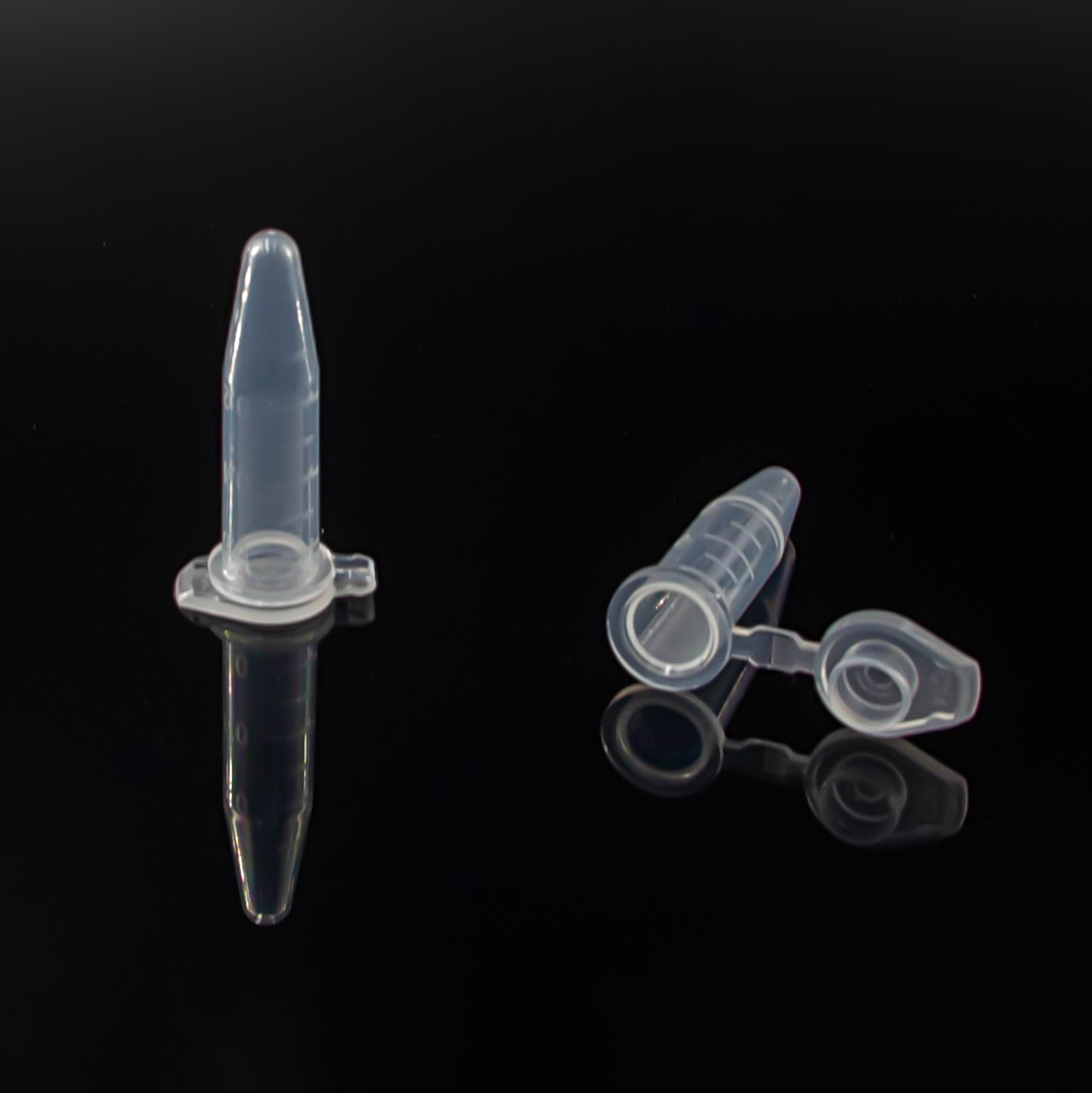
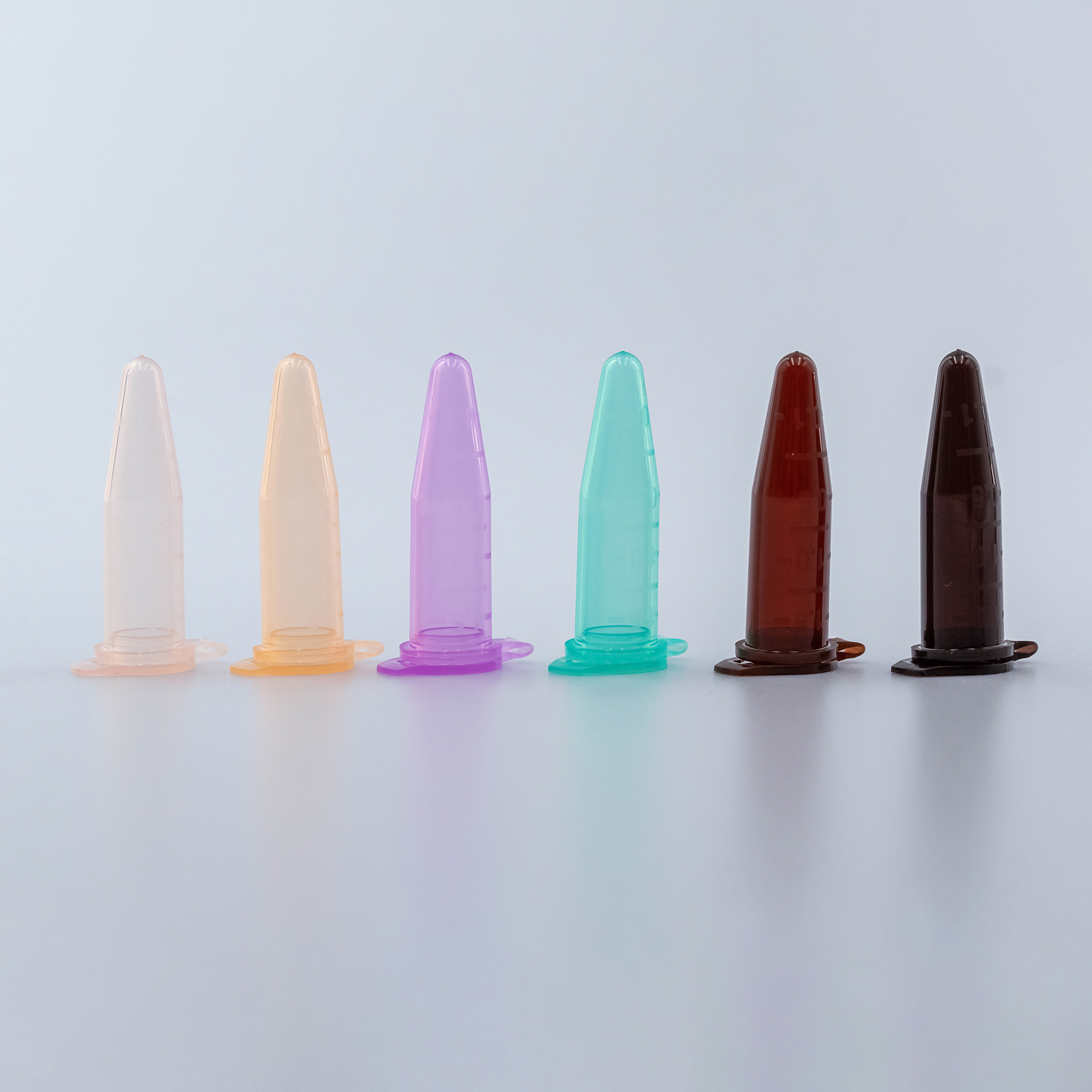
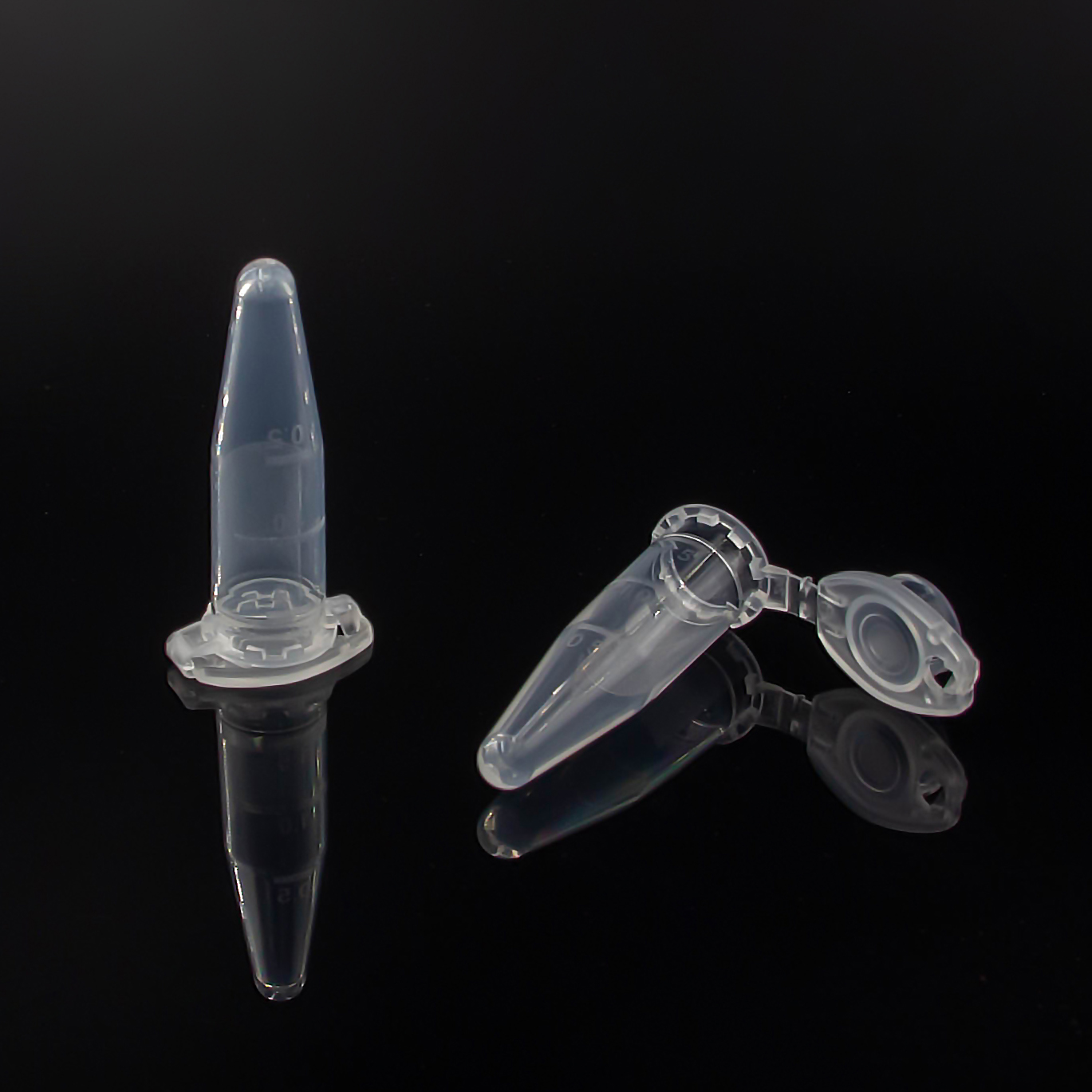

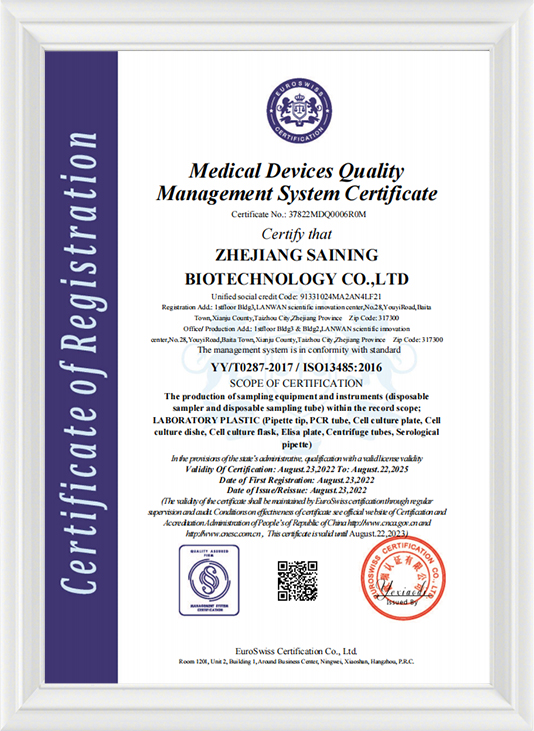
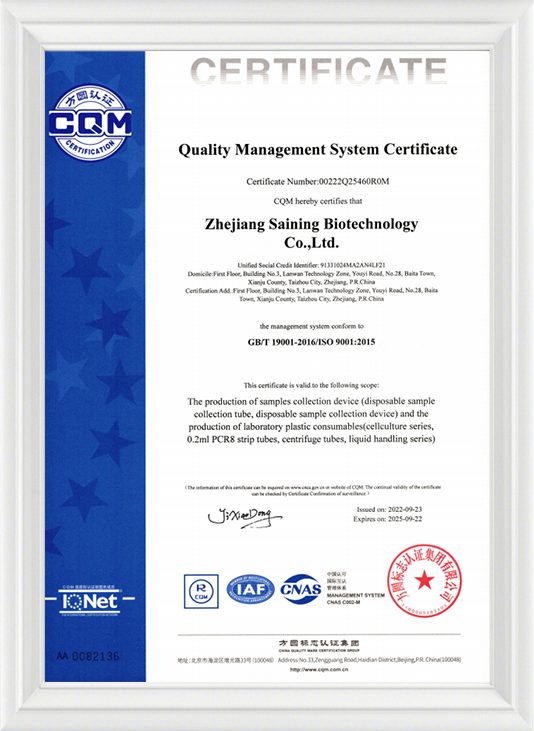
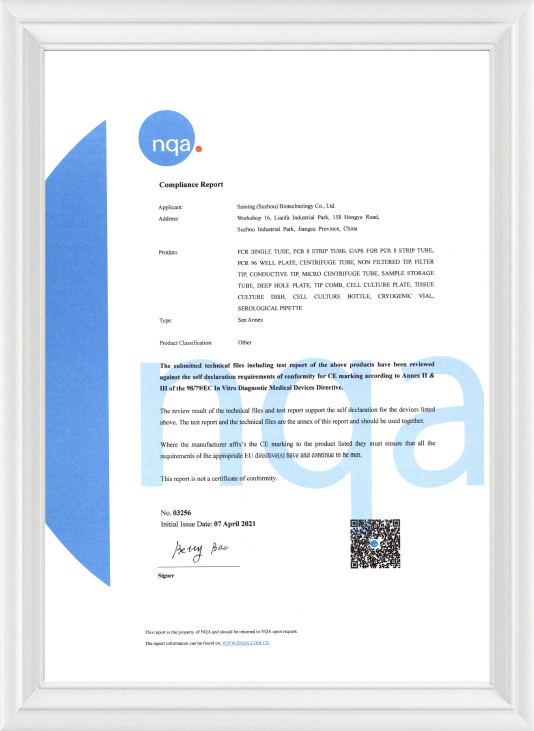
Since its establishment, the company has developed rapidly and now has a 100,000-level purification workshop of 15,000 square meters, a factory area of 30,000 square meters, a Suzhou technology research and development center, a Suzhou production base and a Taizhou production base. The main products include cell culture, biological detection liquid processing, medical equipment, safety protection, etc., which can be widely used in testing institutions (IVD), biological research, medical treatment, new drug research and development, laboratory scientific research and other fields. The product has performance and high quality. After testing by third-party testing agencies and relevant scientific research units, it has the ability to replace high-quality imported products.
-
A plate that meets every dimensional and sterility specification on paper can still arrive compromised if the packaging ...

-
A distributor sourcing plates for an IVD assay developer often assumes that every 96-well format matching the standard 8...
Centrifugal Consumables Industry Knowledge
Centrifugal Consumables: An Overview of Their Role in Laboratory Workflows
Centrifugal consumables are a core category of laboratory supplies used in a variety of settings — from in vitro diagnostics (IVD) to basic biological research, from clinical sample processing to drug discovery. These consumables refer broadly to tubes, vials, and other containers designed specifically to withstand the physical forces exerted during centrifugation. Their function is to safely contain biological samples — such as blood, plasma, serum, cell lysates, or nucleic acid extracts — while they are separated by density or other properties.
Because centrifugation is often a routine step in laboratory workflows, the quality, reliability, and consistency of centrifugal consumables can significantly influence experimental reproducibility, sample integrity, and downstream assay results. Therefore, it is critical for manufacturers and end‑users to understand the technical and material considerations behind these consumables.
Micro Centrifuge Tube: Design, Uses, and Key Considerations
Design and Typical Use Cases
Micro centrifuge tubes (commonly ranging from 0.2 mL to 2.0 mL, though 0.5 mL and 1.5 mL / 2.0 mL are more widespread) are compact plastic tubes designed to hold small volumes of liquid, cell suspensions, nucleic acid samples, proteins, or reagents. Their small size makes them highly suitable for procedures such as DNA/RNA extraction, PCR preparation, quick spin‑down steps, buffer exchanges, sample aliquoting, and small‑scale centrifugation tasks.
In many laboratories, micro centrifuge tubes serve as the standard vessel for routine manipulations because they require small sample volume while offering sufficient capacity for many downstream molecular biology workflows.
Material and Construction Requirements
To reliably handle centrifugation forces, micro centrifuge tubes are typically made of medical‑grade polypropylene, known for its durability, chemical resistance, and ability to withstand repeated freeze–thaw cycles. The tube walls must be uniform, free of defects, and capable of resisting cracking under high g‑forces. Sealing performance is essential: the tube's cap must lock firmly to prevent leakage, evaporation, or aerosol formation, especially when working with infectious material or volatile reagents. Additionally, transparency or optical‑grade clarity can be helpful for visual inspection of samples and approximate volume estimation.
Typical Centrifugation Conditions and Limitations
Micro centrifuge tubes are usually rated for “microcentrifuge” rotor‑based centrifugation, typically up to around 12,000–16,000 × g (depending on tube design). They are not intended for high‑speed or ultracentrifugation tasks requiring very high g‑forces. Users must respect the manufacturer's specified speed and temperature limits to avoid deformation, leakage, or tube failure — especially during cold spins at 4 °C or storage at low temperatures.
Importance for Sample Integrity and Biosafety
Because many micro centrifuge tubes are used for handling biological fluids, cell lysates, or nucleic acid extracts, it is essential that they provide a reliable seal and containment to prevent contamination or cross‑contamination. For labs working in diagnostic or clinical contexts, consistent tube quality reduces the risk of sample loss or contamination — contributing to reliable downstream assays, such as qPCR, sequencing, or immunoassays.
Centrifuge Tube (Standard / Serum / Blood Tubes): Broader Applications and Variants
Variety of Formats and Use Cases
The term “centrifuge tube” extends beyond micro tubes to include larger‑volume tubes — for example 15 mL, 50 mL, or even 250 mL tubes depending on application. These standard centrifuge tubes are commonly used for blood collection and separation (serum, plasma, whole blood), large‑volume cell suspensions, tissue homogenates, culture harvests, filtration pre‑centrifugation, or sample concentration tasks.
Larger tubes are often encountered in workflows such as centrifugation of peripheral blood, cell harvesting from culture flasks, clarification of lysates, or pelleting of large cell populations or tissue debris. They serve as the bridge between small‑volume microcentrifugation and macroscale sample processing.
Material, Shape and Stability Considerations
Standard centrifuge tubes are generally manufactured from polypropylene or polyethylene. The design often includes conical bottoms (to facilitate pelleting), screw‑cap or snap‑cap closures, and sometimes vented caps for filtration or gas exchange needs. Tube walls must be thick enough to tolerate rotor stresses, yet thin enough to allow easy visual inspection. Graduated volume markings on the side help with accurate volume measurement.
Larger tubes may also be designed for use in refrigerated centrifuges, requiring thermal stability over a range of temperatures (e.g. from 4 °C to room temperature or higher). For blood‑collection or clinical‑sample tubes, tubes may also include features like pre‑added anticoagulant or stabilizing agents, though that moves them closer to specialized consumables rather than generic centrifuge tubes.
Risk Management and Proper Use
Using centrifuge tubes outside of their rated capacity or rotor specifications can pose risk: leakage, breakage, sample loss, rotor imbalance, or even damage to centrifuge equipment. Therefore, correct tube selection, proper balancing, and adherence to speed / volume limits are fundamental practices in any lab. It also underscores why raw‑material quality and manufacturing precision matter for tube safety and reliability.
Why Centrifugal Consumables Matter for IVD / Bioresearch / Clinical & Drug Development Settings
Ensuring Experimental Consistency and Sample Quality
In contexts such as in vitro diagnostics, molecular testing, or drug‑development workflows, reproducibility and sample consistency are non‑negotiable. Subpar centrifugal consumables — with wall defects, poor seals, or inconsistent volumes — can introduce variability, compromise yield, or contaminate samples. Reliable consumables help labs maintain consistent sample processing, which supports downstream analyses like PCR, ELISA, flow cytometry, or cell culture.
Supporting Regulatory and Biosafety Requirements
Clinical laboratories and diagnostic centers often follow strict regulatory or biosafety standards. Using well‑designed, reliable centrifugal consumables ensures containment of potentially infectious or hazardous materials, reduces risk of spills or aerosol generation, and supports clean handling and disposal practices.
Scalability and Workflow Efficiency
From small‑scale research labs to large‑scale diagnostic or manufacturing facilities, centrifugal consumables support scalable workflows. Micro centrifuge tubes are ideal for high‑throughput molecular testing or sample aliquoting; larger centrifuge tubes enable processing of larger volumes such as blood or cell culture harvests. A robust supply of well‑manufactured consumables contributes to efficient sample throughput and operational consistency.
Key Manufacturing Considerations for High‑Quality Centrifugal Consumables
Material Selection and Sterility
Manufacturers should use high‑grade polypropylene (or equivalent) that resists chemical exposure, freezing/thawing cycles, and mechanical stress. For clinical or IVD applications, tubes may need to be sterile, RNase/DNase‑free, pyrogen‑free, and certified for biocompatibility.
Precise Molding and Pressure‑Resistant Design
Wall thickness, cap design, conical bottom geometry, closure integrity, threading precision (for screw caps), and clear volume markings are all important — small deviations can compromise performance. Pressure resistance must be validated across the full range of intended g‑forces and temperatures.
Quality Control and Traceability
Batch‑to‑batch consistency is critical. Each batch should undergo QC checks for tolerance (volume, dimensions), leak‑testing, centrifuge stress‑testing, sterility/contamination testing (if required), and material purity. For regulated environments, traceability and documentation support compliance.
How to Choose Between Micro Centrifuge Tubes and Standard Centrifuge Tubes
When selecting between micro centrifuge tubes and larger standard centrifuge tubes, several factors guide the decision:
- Sample volume: small volumes → micro tubes; large volumes or cell suspensions → standard tubes.
- Downstream application: nucleic‑acid extraction, PCR, small‑volume spins → micro tubes; blood separation, cell pelleting, tissue homogenates → standard tubes.
- Centrifugation conditions: microcentrifuges (e.g. up to 15 k g) → micro tubes; floor centrifuges, refrigerated rotors, larger volume separation → standard tubes.
- Containment and biosafety needs: for hazardous samples, choose tubes with secure screw‑caps or reliable closures; for high sample throughput, choose tubes compatible with automated handling or rack formats.

