



 中文简体
中文简体 English
Pasteur Pipette Factory

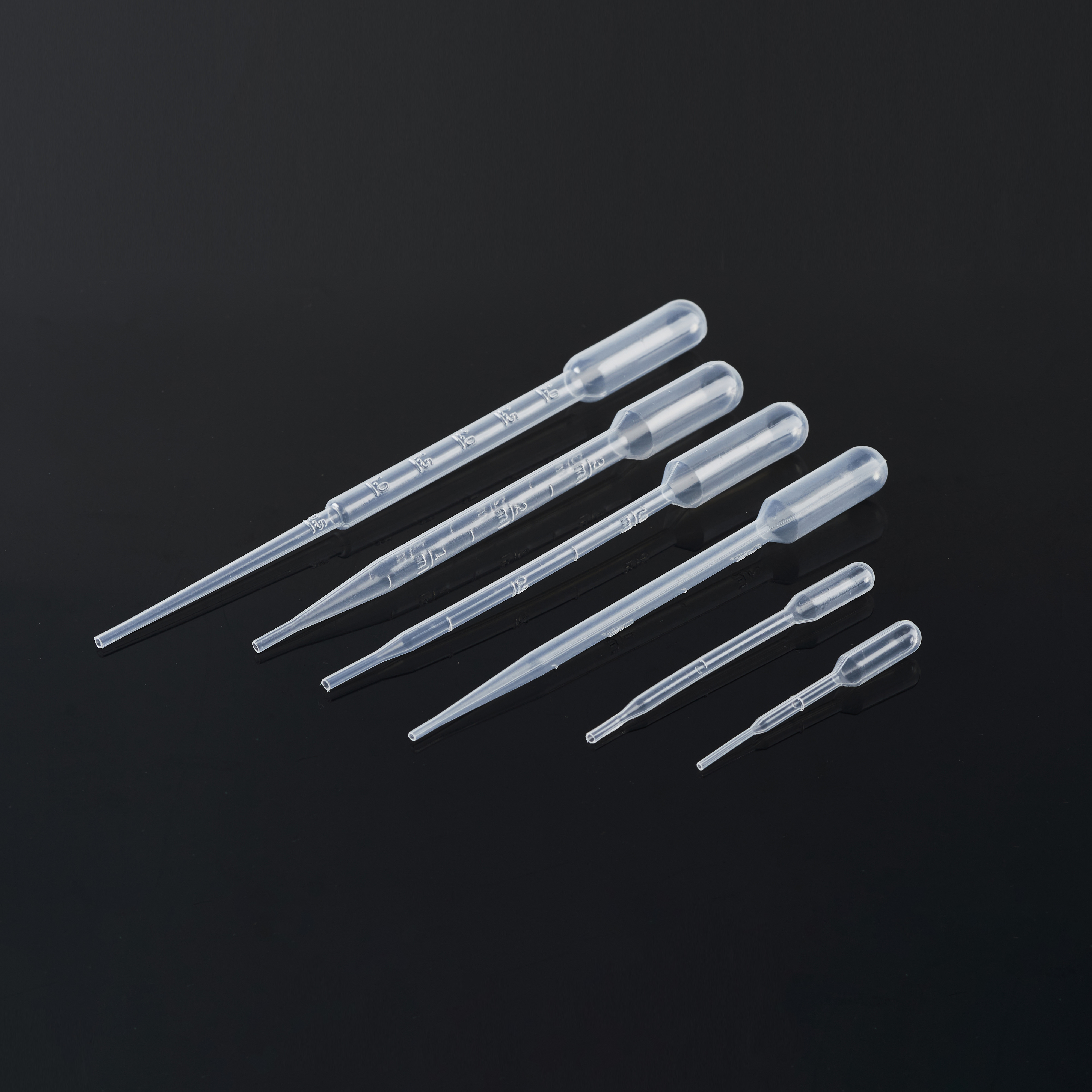

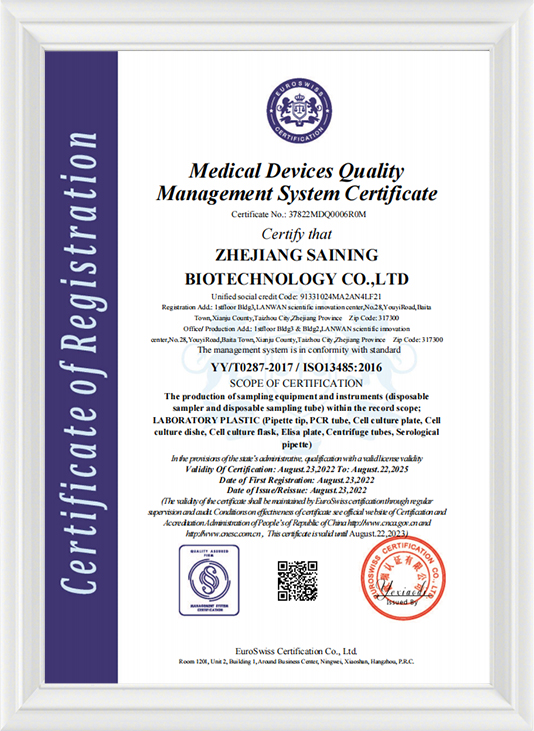
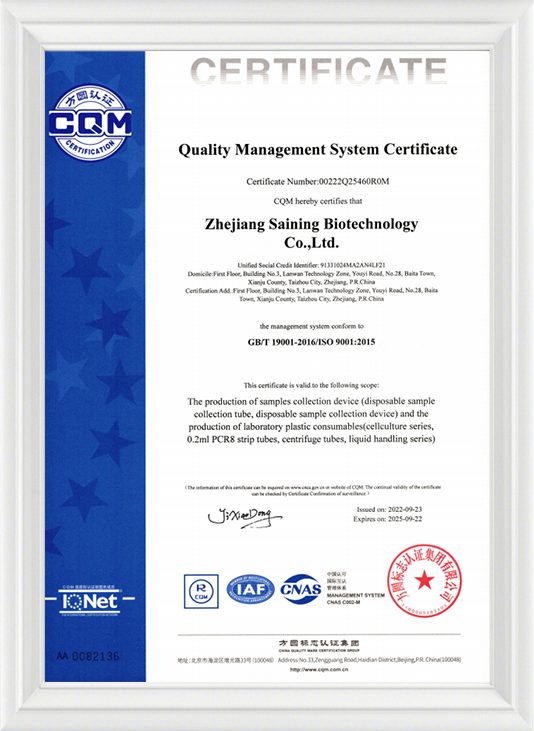
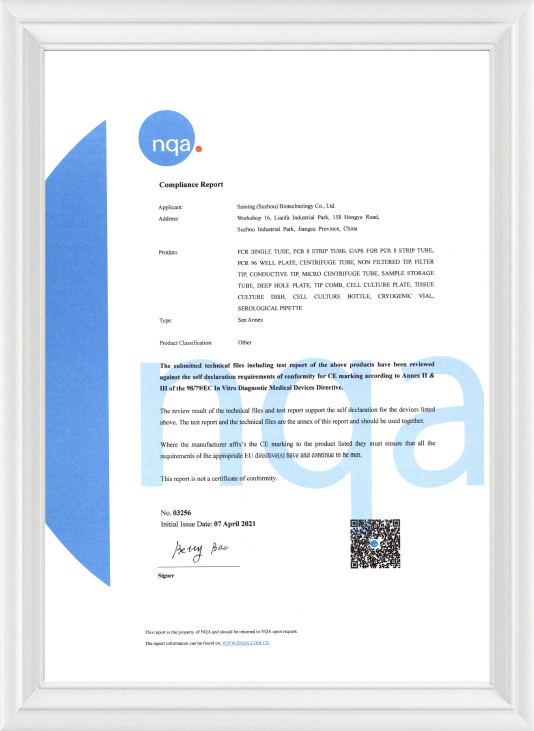
Since its establishment, the company has developed rapidly and now has a 100,000-level purification workshop of 15,000 square meters, a factory area of 30,000 square meters, a Suzhou technology research and development center, a Suzhou production base and a Taizhou production base. The main products include cell culture, biological detection liquid processing, medical equipment, safety protection, etc., which can be widely used in testing institutions (IVD), biological research, medical treatment, new drug research and development, laboratory scientific research and other fields. The product has performance and high quality. After testing by third-party testing agencies and relevant scientific research units, it has the ability to replace high-quality imported products.
-
A plate that meets every dimensional and sterility specification on paper can still arrive compromised if the packaging ...

-
A distributor sourcing plates for an IVD assay developer often assumes that every 96-well format matching the standard 8...
Pasteur Pipette Industry Knowledge
Pasteur Pipette: Definition and Common Uses
The term Pasteur Pipette refers to a simple glass or plastic pipette, typically with a narrow tip and a bulb at the top (in glass versions), used to transfer small volumes of liquid. In many laboratories, Pasteur pipettes serve as a basic tool for moving reagents, media, or samples between containers. They are widely used in environments such as in‑vitro diagnostics (IVD), biological research, cell culture, and general lab maintenance tasks. Because of their simplicity and flexibility, Pasteur pipettes often serve as a go‑to tool for routine tasks: adding reagents dropwise, transferring supernatant, mixing small volumes, or inoculating media in microbial work.
Why Pasteur pipets remain relevant in modern labs
Despite the emergence of advanced pipetting devices and automated liquid‑handling systems, Pasteur pipets — especially in their disposable form — remain common in many labs worldwide. Their relevance stems from several practical advantages:
- Low cost and small setup — they require no calibration, no maintenance, and no special training.
- Flexibility — they are well-suited for small, quick transfers, mixing viscous liquids, or handling hazardous reagents safely with disposable versions.
- Versatility — from mixing, sample transfer, waste removal to medium change in cell culture, Pasteur pipets handle many non‑quantitative lab tasks.
Thus, in fields like IVD, biological research, and pre‑clinical testing — where speed, ease-of-use, and contamination control are often more critical than high‑precision volume measurement — Pasteur pipets remain a staple.
Disposable Transfer Pipette: What It Means
A Disposable transfer pipette is essentially a single‑use plastic pipette designed to perform the same tasks as traditional glass Pasteur pipettes, but with features tailored for modern lab practices. These pipettes are typically molded from polyethylene or polypropylene, sometimes with graduated markings. They are sterilized and individually packaged, making them ready-to-use and reducing cross-contamination risk.
Disposable transfer pipettes are especially common where contamination control and biosafety are priorities — such as IVD, microbiology, or cell culture labs. Because they are single-use, there's no need for cleaning or sterilizing after each use, saving time and reducing risk of human error.
Pasteur Pipette vs Disposable Transfer Pipette: Key Differences & Use Cases
| Feature | Glass / Reusable Pasteur Pipette | Disposable Transfer Pipette |
|---|---|---|
| Material | Glass (sometimes plastic) | Plastic (polyethylene / polypropylene) |
| Reuse | Reusable — requires cleaning/sterilization | Single-use — discard after use |
| Contamination risk | Higher if cleaning is not thorough | Lower — no reuse |
| Convenience | Requires cleaning, storage, sterilization | Ready-to-use, no maintenance |
| Typical use cases | Simple reagent transfer, dropwise addition, mixing | Sample transfer in sterile or biosafety contexts, cell culture media changes, waste removal |
Because of these differences, many labs today prefer disposable transfer pipettes for tasks involving biohazardous materials, diagnostics samples, or sterile operations — while still keeping glass Pasteur pipettes for general, non-sterile tasks.
Quality Considerations When Choosing Pasteur Pipettes or Disposable Transfer Pipettes
When your lab supply company manufactures Pasteur and disposable pipettes for IVD, research, or medical labs, several quality aspects merit attention:
- Material purity and biocompatibility: Plastic pipettes should be made from lab-grade, medical-grade polymers free from leachables or contaminants. This ensures compatibility with sensitive assays, cell cultures, and diagnostic reagents.
- Sterility and packaging: For disposable pipettes, sterilization (e.g. gamma‑irradiation or ethylene oxide) and secure individual packaging help maintain sterility until use, and less contamination risk.
- Tip shape and smoothness: Tips should be smooth, consistent in shape and free from burrs or irregularities — critical if the pipette contacts sensitive samples, cells, or reagents.
- Ergonomics and ease of use: Bulb-based glass pipettes should have soft, squeezable bulbs; plastic pipettes should be easy to hold and control. Good ergonomics helps reduce repetitive strain, particularly in labs with frequent pipetting.
- Volume and drop consistency (if used for dropwise addition): For some protocols, the drop size must be reproducible — a well-designed pipette helps maintain consistency across uses.
By ensuring these quality dimensions, a supplier helps scientists and technicians maintain experimental reliability, biosafety, and reproducibility.
Applications in IVD, Biological Research, and Cell Culture
- IVD / Diagnostic Sample Preparation: Disposable transfer pipettes are often used to move patient samples (e.g. blood, serum, swab eluates) into reaction tubes, mixing reagents, or disposing waste — all under sterile or biosafety conditions. Their single‑use nature helps less cross‑sample contamination.
- Microbiology & Cell Culture Labs: Researchers may use Pasteur pipettes — glass or disposable — to change media, remove supernatant, transfer small volumes of reagents, or pipette liquids in sterile settings.
- Pre‑clinical Testing / Drug Screening: In early‑stage assays, disposable transfer pipettes may be used for reagent preparation, serial dilutions, or waste handling — especially when using bioactive or cytotoxic compounds.
- Sample Handling in General Lab Work: For everyday lab tasks — such as filling petri dishes, preparing buffers, decanting solutions — Pasteur pipettes remain a convenient tool.
Why Having Both Types in Your Product Line Matters
As a manufacturer supplying lab consumables, offering both glass Pasteur pipettes and disposable transfer pipettes can meet a wide range of lab needs. Here's why:
- Some labs still prefer glass pipettes for cost-effective, non‑sterile, non‑critical tasks.
- Other labs — particularly in diagnostics, sterile cell culture, or biosafety contexts — demand sterilized, disposable pipettes to less contamination risk.
- Having both options allows customers to choose based on their protocol requirements, regulatory standards, lab workflows, and budget constraints.
Thus, inclusion of both types broadens your market reach across research labs, diagnostic centers, hospitals, biotech companies, and more.

