



 中文简体
中文简体 English
Prefabricated Products Series Factory
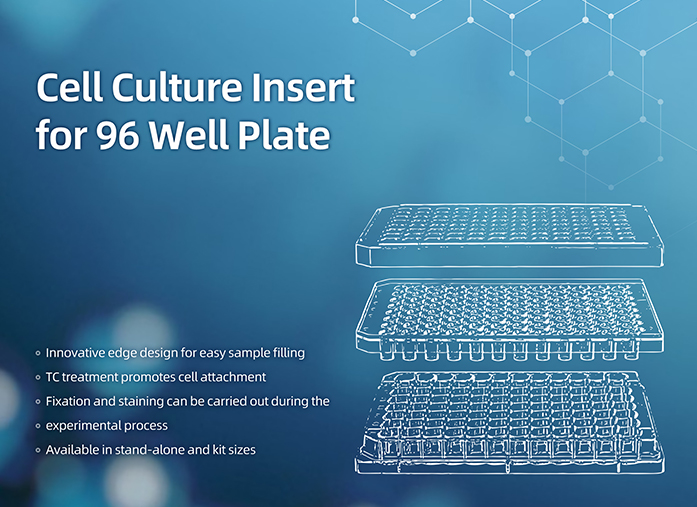
In the process of conducting life science research, researchers often use pre-treatment on certain consumables to meet experimental requirements and improve experimental convenience. For example, they may use polylysine coating, gelatin coating, laminin coating, and ready-to-use microbial plates。


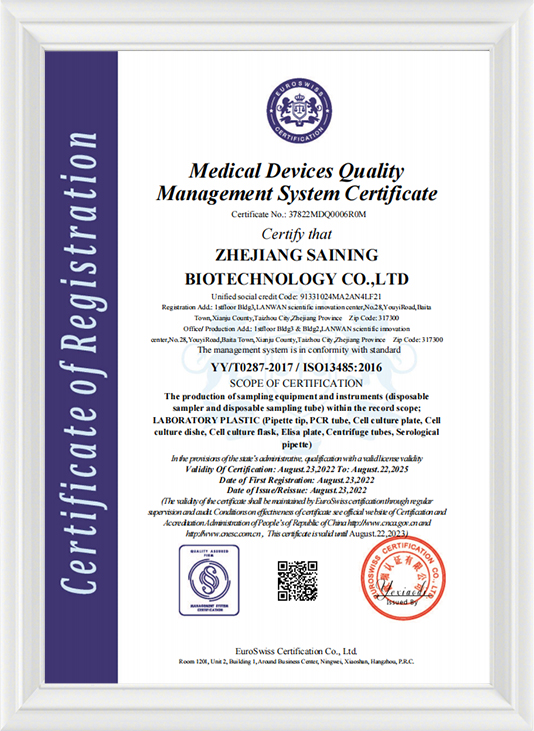
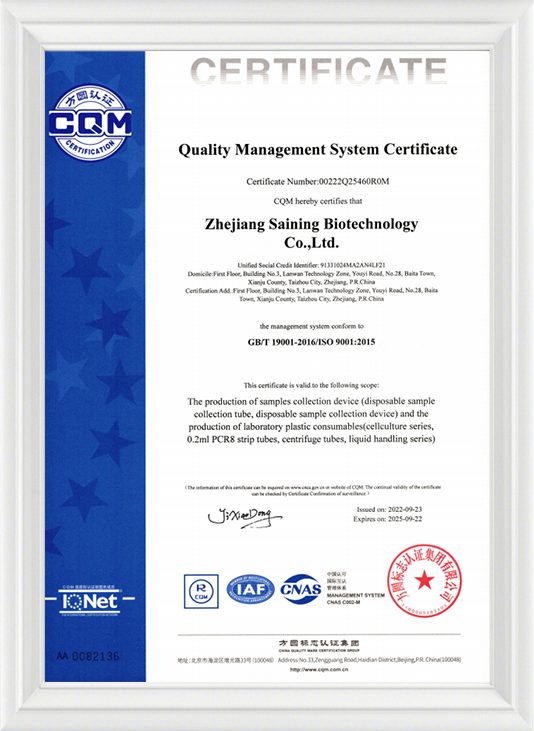
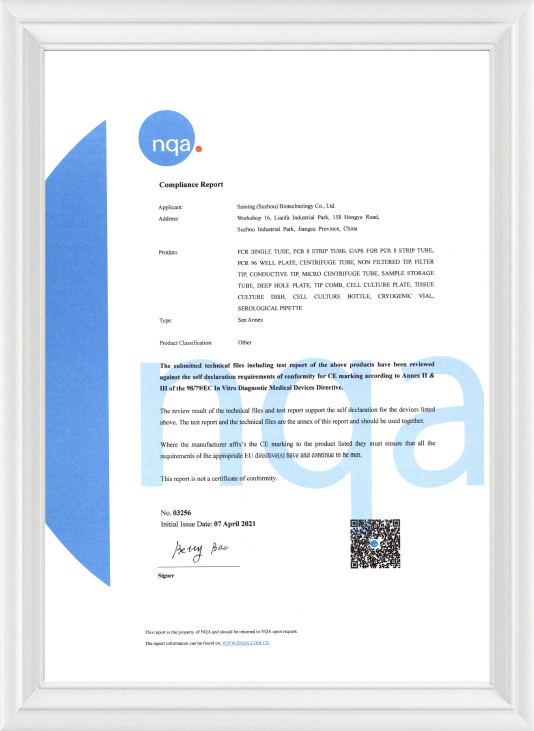
Since its establishment, the company has developed rapidly and now has a 100,000-level purification workshop of 15,000 square meters, a factory area of 30,000 square meters, a Suzhou technology research and development center, a Suzhou production base and a Taizhou production base. The main products include cell culture, biological detection liquid processing, medical equipment, safety protection, etc., which can be widely used in testing institutions (IVD), biological research, medical treatment, new drug research and development, laboratory scientific research and other fields. The product has performance and high quality. After testing by third-party testing agencies and relevant scientific research units, it has the ability to replace high-quality imported products.


-
Working successfully with cell cultures requires mastery not just of experimental design, but also of aseptic technique ...

-
Cell culture work often involves significant investment in consumables, including Cell Culture Flask and Cell Culture Di...
Prefabricated Products Series Industry Knowledge
Prefabricated Products Series: Concept and Value
The term Prefabricated Products Series refers to a category of laboratory consumables that are manufactured, assembled, and quality‑checked before leaving the production site. These products reach end users ready for immediate deployment in research, diagnostics, or biomanufacturing workflows. Prefabrication encompasses a wide range of items — from pre‑assembled cultureware to ready‑made sample collection kits — all designed to streamline laboratory operations.
The main value of this approach lies in standardization, traceability, and reproducibility. By controlling manufacturing conditions (e.g. clean‑room environment, validated assembly protocols, stringent QC), prefabricated products reduce variability between batches and less the risk of contamination or user error. For laboratories working in in vitro diagnostics (IVD), cell biology, molecular research, or drug development, such consistency is critical. Prefabricated consumables free researchers from laborious preparation steps, enabling them to focus on experimental design and data collection rather than on preparatory work.
Moreover, prefabrication improves workflow efficiency. When a research lab receives a ready‑to‑use kit or plate, the time between unpacking and experimental setup shrinks significantly. For high-throughput environments or labs with limited technical staff, this can translate into more experiments completed per day, less downtime, and lower risk of error due to manual handling.
Pre‑coated & Surface‑Treated Cultureware: What It Means & Why It Matters
Pre‑coated & Surface‑Treated Cultureware refers to culture plates, flasks, or dishes whose surfaces have been modified prior to sale. The coating or surface treatment can include extracellular matrix (ECM) proteins, synthetic adhesion promoters, or specialized polymers that influence cell behavior. Surface treatments may also involve chemical or physical modifications to improve cell attachment, spreading, differentiation, or viability.
The importance of pre‑coated cultureware lies in its ability to provide a consistent and well‑defined substrate for cell culture. Without such coatings, many cell types (especially primary cells, stem cells, or delicate lines) may struggle to adhere, proliferate, or display expected morphology. By offering surfaces tailored for adhesion or specific cell behavior, pre‑coated cultureware helps labs achieve more reproducible, biologically meaningful results.
In addition, surface treatment can modify properties such as hydrophobicity, porosity, or charge distribution — factors known to impact cell attachment or drug absorption in assays. For example, a hydrophilic surface with defined charge may favor even cell spreading, while a more hydrophobic or specialized polymer might reduce nonspecific binding of small molecules in pharmacological assays.
For workflows such as IVD test development, drug screening, or cell‑based assays, these surface‑treated products reduce variability coming from substrate inconsistencies, and help ensure that the cell behavior is driven primarily by experimental variables rather than culture vessel variations.
Ready‑to‑Use Coated Cultureware: Bridging Convenience and Reproducibility
Ready‑to‑Use Coated Cultureware are pre‑coated plates, flasks or dishes delivered to end users fully prepared for immediate seeding of cells. The “ready-to-use” nature implies small to no preparatory steps are required after unpacking — no need for sterilization, coating, washing, or additional handling.
This ready-to-use format addresses several practical needs in modern laboratories:
- Time-saving: Researchers save the hours usually spent on sterilizing, coating, washing, and drying cultureware prior to use. When experiment timelines are tight — e.g. time-sensitive assays, synchronized cell cultures, or high-throughput screening — that saved time can be crucial.
- Reduced technical variability: Manual coating is often subject to variation in coating concentration, incubation time, uniformity, and rinsing — all of which can affect experimental outcomes. Ready-to-use coated cultureware standardizes these variables.
- Lower risk of contamination: Each additional handling step introduces risk of contamination (microbial or particulate). By pre-coating in controlled manufacturing conditions and packaging under sterile conditions, ready-to-use items help maintain sterility and sample integrity.
- Improved reproducibility between labs: When multiple labs use the same batch of ready‑to‑use coated cultureware, or when long-term projects rely on reproducible substrate conditions, ready‑to‑use products ensure that cell behavior differences reflect biological or experimental factors — not vessel differences.
Overall, ready-to-use coated cultureware represents a practical bridge between convenience and the quality demands of modern cell‑based research and IVD workflows.
Common Considerations in Manufacturing and User Selection
When a manufacturer or buyer deals with Prefabricated Products Series, Pre‑coated & Surface‑Treated Cultureware, or Ready‑to‑Use Coated Cultureware, several critical considerations emerge:
Material and Sterility Control: The base material (e.g. polystyrene, treated plastics, or specialized polymers) must meet biocompatibility standards. Sterility must be assured during coating and packaging — for cell culture, microbial control, or diagnostic sample work.
Surface Uniformity and Batch Consistency: Coating procedures must ensure even distribution and stable adherence of ECM proteins or polymers. Batch-to-batch consistency is vital — for longitudinal studies or comparative experiments where substrate variability can confound results.
Quality Assurance and Documentation: For IVD or regulated labs, traceability (lot numbers, sterilization dates, coating details) is often required. Certificates of analysis or quality control reports help satisfy regulatory or institutional audit requirements.
Shelf Life & Storage Conditions: Coated or treated surfaces may degrade over time or under subideal storage (e.g. humidity, temperature). Users should be informed about recommended storage conditions and use‑by dates.
User Feedback & Customization Demand: Some labs require specialized coatings — e.g. certain ECM proteins, coatings for neuronal cells, or adsorptive‑resistant surfaces for drug assays. Manufacturers may offer customization under a “prefabricated series” umbrella — enabling clients to receive tailored cultureware without in‑house coating efforts.
Why These Product Series Are Relevant in Modern IVD, Research, and Medical Labs
In contemporary biomedical research — including IVD development, drug screening, regenerative medicine, and basic cell biology — reproducibility, scalability, and operational efficiency are key. The combination of prefabricated manufacturing, surface-treated cultureware, and ready‑to‑use coated vessels aligns well with these demands:
- Research labs often run high-throughput assays and need to reduce per‑assay overhead. Prefabricated and ready‑to‑use items help less setup time.
- Diagnostic labs or IVD developers operate under strict quality and regulatory oversight. Batch-controlled and documented consumables support compliance and audit readiness.
- Drug development or cell-based screening pipelines require consistency across many experiments, possibly over months; surface‑treated cultureware helps ensure that substrate variability does not skew results.
- For translational and clinical research — e.g. primary cell cultures, stem-cell differentiation, co-culture assays — having standardized, pre-treated cultureware reduces technical variability and helps make outcomes more comparable across labs or studies.

