



 中文简体
中文简体 English
Bio-Filtration Consumables Factory
Biofiltration consumables are a type of consumable used in the fields of bioscience and biopharmaceuticals for filtering and separating solid substances and impurities from biological samples.
We offer a variety of filtration-related consumables, such as needle filters, vacuum filters, and ultrafiltration tubes, to help researchers efficiently achieve filtration processing of biological samples.


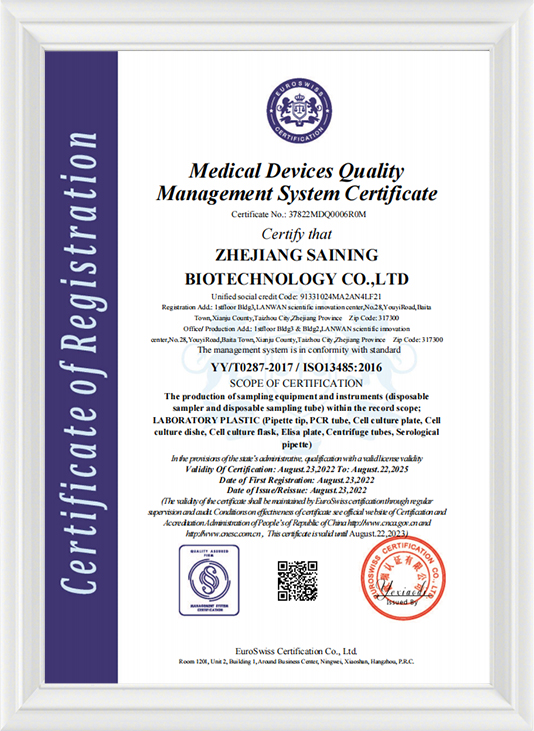
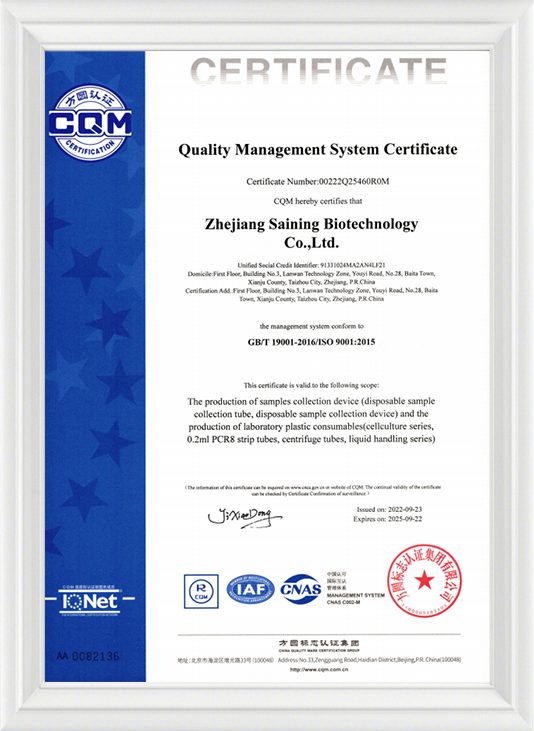
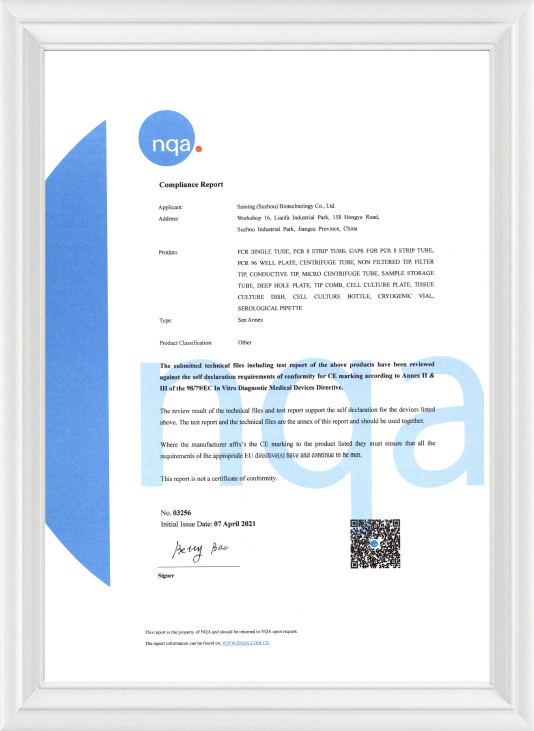
Since its establishment, the company has developed rapidly and now has a 100,000-level purification workshop of 15,000 square meters, a factory area of 30,000 square meters, a Suzhou technology research and development center, a Suzhou production base and a Taizhou production base. The main products include cell culture, biological detection liquid processing, medical equipment, safety protection, etc., which can be widely used in testing institutions (IVD), biological research, medical treatment, new drug research and development, laboratory scientific research and other fields. The product has performance and high quality. After testing by third-party testing agencies and relevant scientific research units, it has the ability to replace high-quality imported products.
-
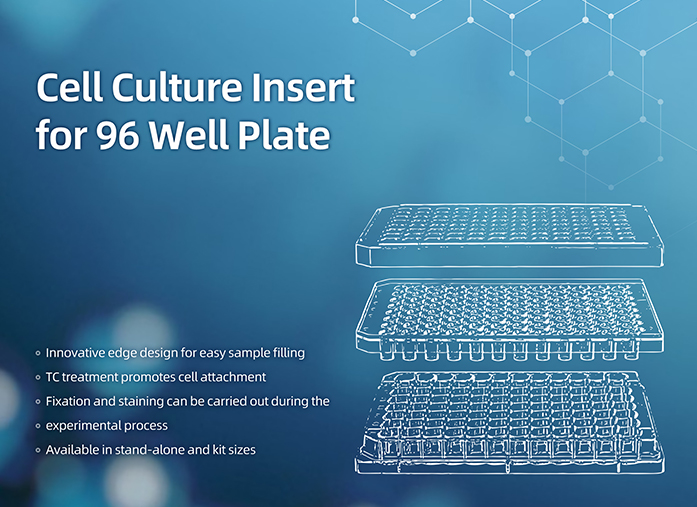
Accurate results from assays using a Cell Culture Plate (96 Well) or an ELISA Plate hinge on many factors, and one of th...

-
In assays using formats like the Cell Culture Plate (96 Well) and especially the ELISA Plate, researchers sometimes find...
Bio-Filtration Consumables Industry Knowledge
Bio‑Filtration Consumables: Overview and Importance
Bio‑filtration consumables are disposable or reusable supplies designed to filter biological fluids — such as blood, serum, cell culture supernatant, or environmental samples — to remove particulates, microbes, or debris. In clinical, diagnostic, research and drug development contexts, filtration helps ensure sample clarity, sterility and consistency. Proper bio‑filtration supports downstream processes such as nucleic acid extraction, cell culture, protein analysis, or microbial assays.
The reliability of a bio‑filtration consumable depends on material biocompatibility, membrane pore size, chemical resistance, and absence of leachables. Selecting appropriate bio‑filtration consumables contributes to safety, reproducibility and data integrity across workflows.
Laboratory Filtration Consumables: Key Considerations for Use
Laboratory filtration consumables encompass a wide range of devices — syringes with filters, vacuum filter units, spin filters, filtration tips, and membrane filter plates. While general lab workflows may involve simple filtration for clarity or debris removal, in diagnostic or research settings, the stakes are higher.
Critical considerations when choosing laboratory filtration consumables include:
- Filter membrane material — typical membrane types include PES (polyethersulfone), PVDF (polyvinylidene fluoride), nylon, or cellulose‑based membranes. Each offers different chemical compatibility, binding properties, and flow characteristics. For example, PES tends to exhibit low protein binding, which may be beneficial for protein‑ or nucleic acid‑rich samples.
- Pore size and retention rating — depending on whether the goal is to remove cells, cell debris, bacteria, or larger particles. For instance, 0.22 µm filters are commonly used to sterilize or remove bacteria, while larger pore sizes (e.g. 0.45 µm) may be used for pre‑filtration to remove larger debris.
- Volume capacity and throughput — small spin filters or syringes may be sufficient for low‑volume tasks, while larger-volume filter units may be needed for bulk processing. Proper selection ensures efficient sample handling without compromise.
- Sterility and pre‑sterilization — many lab workflows demand sterile filtration to avoid contamination. Pre‑sterilized, individually wrapped consumables can save handling time and reduce contamination risks.
- Compatibility with sample type — whether dealing with aqueous buffers, serum, cell culture media, or organic solvents. The chosen consumable must withstand the chemical conditions without membrane degradation or leachables that could interfere with assays.
Using well‑matched laboratory filtration consumables helps ensure consistency, reproducibility, and reliability across experiments or diagnostic workflows.
Microbiology Filtration Consumables: Role in Microbial and Cell Applications
Microbiology filtration consumables refer to filters and membrane units used specifically in microbial contexts — for sterilizing media, clarifying bacterial or fungal suspensions, harvesting microbes, or filtering environmental or water samples. In settings such as IVD microbial detection, environmental microbiology, or cell culture contamination control, these consumables play essential roles.
Important aspects when applying microbiology filtration consumables:
- Achieving sterility and removing contaminants — Many microbiology workflows require the removal of unwanted microbes or particulates without damaging target organisms. This can involve filtration of media before sterilization, or sterility testing.
- Maintaining viability or integrity of target microbes — Some filters are designed to retain microbes rather than exclude them, enabling isolation or concentration of microbial cells for downstream analysis. Filter material, pore size and flow conditions need careful selection to preserve viability.
- Preventing cross‑contamination and ensuring biosafety — Disposable, single‑use filtration units reduce the risk of cross‑sample contamination. In labs handling pathogens or sensitive microbial samples, using sterile, individually packaged filtration consumables helps protect both samples and operators.
- Adaptability for different sample types — Microbiology filtration consumables must be compatible with different broth media, buffer systems or environmental samples. Membrane chemical resistance and flow performance under varying viscosities or particulate loads are key.
- Support for downstream workflows — After filtration, samples may go to culture, microscopy, nucleic acid extraction, or biochemical assays. High-quality filtration consumables less loss of sample, avoid leachables or degradants, and preserve sample integrity to support accurate results.
Integrating Filtration Consumables into IVD, Research, and Medical Workflows
When applied in in‑vitro diagnostics (IVD), research labs, drug development or medical sample processing, filtration consumables — whether bio‑, lab‑, or microbiology‑oriented — contribute in multiple ways:
- Ensuring sample quality and sterility — Filtration helps remove particulates, microbes or debris, reducing background noise or contamination that could otherwise compromise assays.
- Improving reproducibility and consistency — Standardized consumables with known membrane properties and filtration performance help ensure consistent results across runs, labs, or batches.
- Reducing risk and simplifying workflows — Pre‑sterilized, ready‑to‑use filtration units reduce manual handling, contamination risk, and time. For clinical labs or high‑throughput diagnostic centers, this enhances efficiency.
- Supporting diverse sample types and volumes — From small-volume blood or serum filtration to large‑volume environmental sample processing, a range of consumables allows flexibility.
- Facilitating downstream molecular or cellular assays — Clean, sterile, debris‑free samples are essential for nucleic acid extraction, cell culture, protein analysis, or microbial detection. Proper filtration underpins reliable downstream performance.
Guidance for Selecting and Using Filtration Consumables
When designing or selecting filtration consumables for your lab or for supplying to customers, consider the following guidelines:
- Match the membrane material to your application — For protein or nucleic acid assays, low‑binding membranes like PES or PVDF may be preferred. For sterility or media filtration, compatibility with reagents and sterilization methods matters.
- Choose appropriate pore size and format — Use 0.22 µm for sterilizing media or removing bacteria; 0.45 µm for pre‑filtration; larger pores or special filters when working with viscous samples or high particulate loads. For microbial concentration, consider filters that trap organisms without damaging them.
- Use sterile, individually wrapped consumables when possible — Especially for clinical, diagnostic, or microbiology work where contamination risk must be lessened.
- Ensure chemical and thermal compatibility — Sample buffers, solvents, or reagents should not degrade the membrane or leach contaminants; sterilization methods (autoclaving, gamma, etc.) must be compatible with materials.
- Validate performance under real‑world conditions — Before routine use, test filtration performance (flow rate, retention, viability for microbial applications) under representative sample conditions.
- Consider disposability vs reusability carefully — Disposable units reduce contamination risk and handling burden, while reusable systems may save cost but require rigorous cleaning and sterilization protocols.

