



 中文简体
中文简体 English
Inoculating Loop Factory



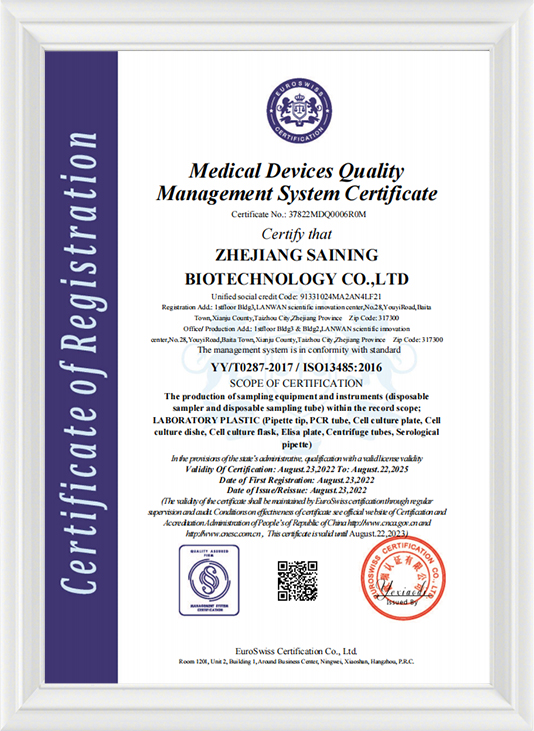
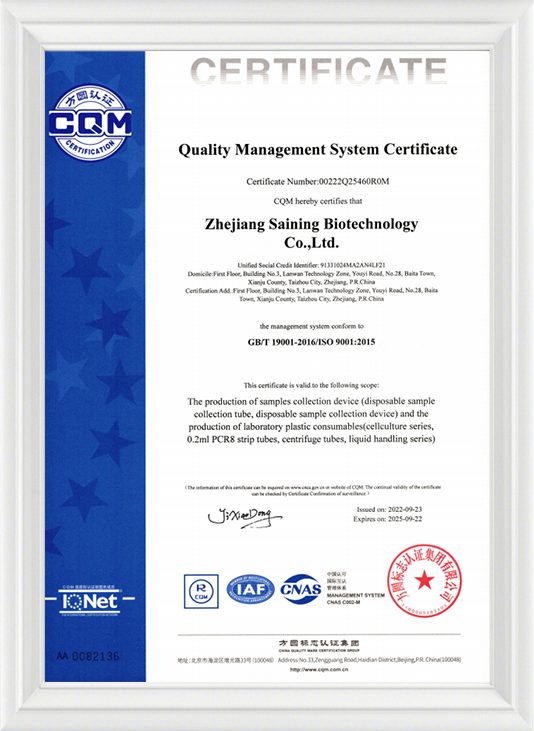
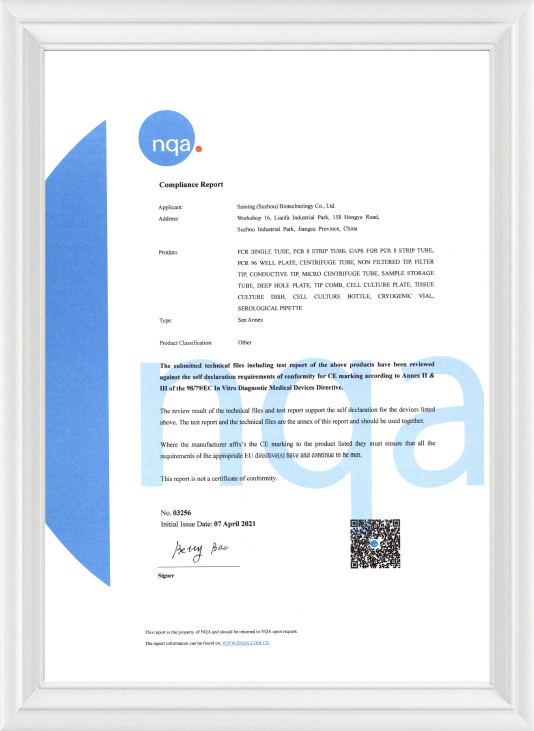
Since its establishment, the company has developed rapidly and now has a 100,000-level purification workshop of 15,000 square meters, a factory area of 30,000 square meters, a Suzhou technology research and development center, a Suzhou production base and a Taizhou production base. The main products include cell culture, biological detection liquid processing, medical equipment, safety protection, etc., which can be widely used in testing institutions (IVD), biological research, medical treatment, new drug research and development, laboratory scientific research and other fields. The product has performance and high quality. After testing by third-party testing agencies and relevant scientific research units, it has the ability to replace high-quality imported products.
-
A Cells craper is a laboratory tool used to detach adherent cells from the surfaces of culture dishes, flasks, and plate...

-
Distributors supplying molecular biology and genomics labs have watched a specific request show up more consistently in ...
Inoculating Loop Industry Knowledge
Inoculating Loop: Purpose and Common Uses
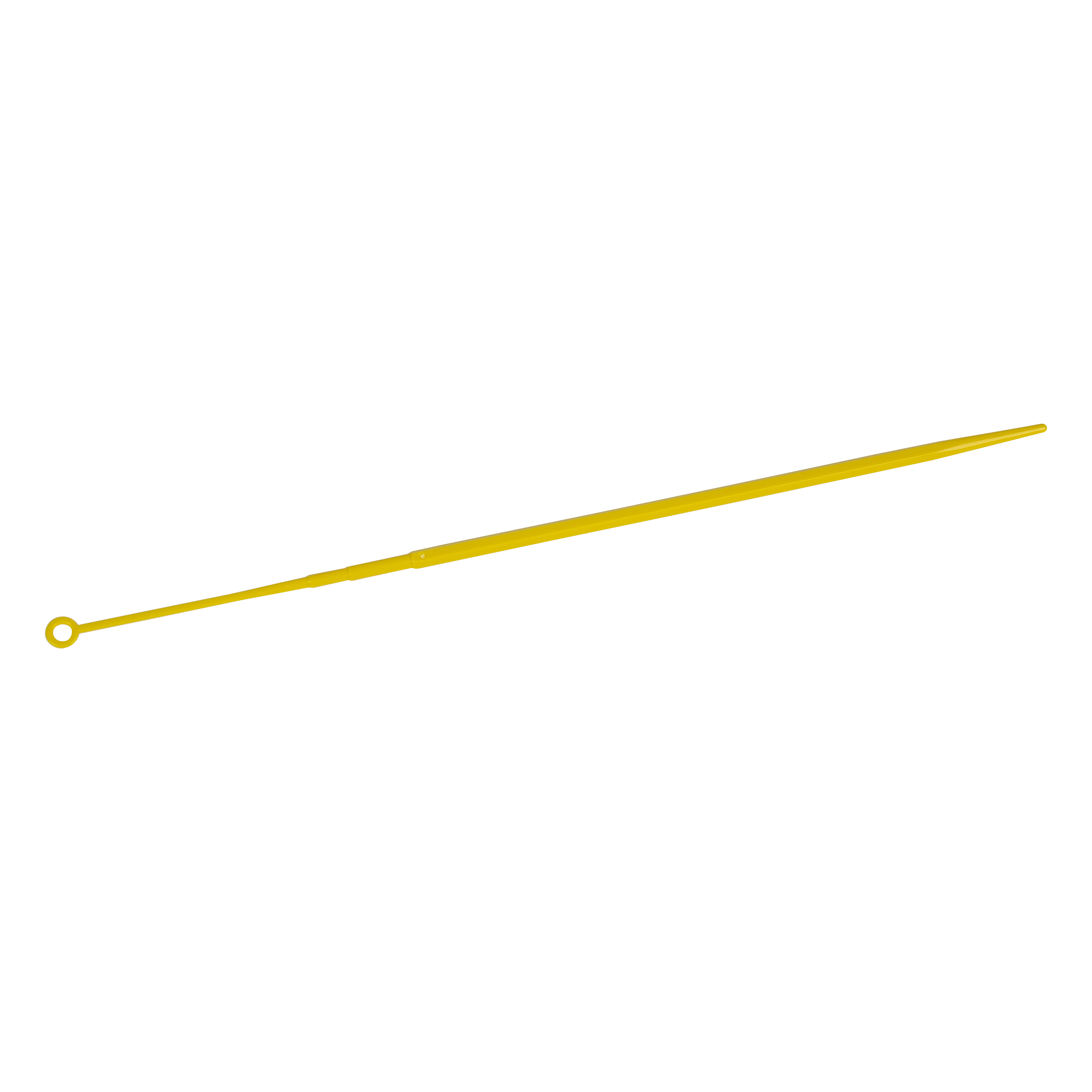
An inoculating loop is a fundamental tool in microbiology labs, used to transfer microorganisms such as bacteria, fungi or yeast from one medium to another. Typically constructed from metal (e.g., nichrome or platinum wire) or from heat-resistant plastic, the loop is sterilized by flame or dry heat before use. Its circular or elongated loop at the end allows a small, controlled amount of microbial sample to be picked up and streaked onto agar plates or added into broth media. Because of its simple design and ease of sterilization, the inoculating loop remains an essential instrument for subculturing microorganisms, picking single colonies, and inoculating liquid media.
In practical workflows, lab technicians often sterilize the loop, allow it to cool, and then gently touch a colony or sample suspension to gather cells without significantly disturbing the source culture. This controlled transfer helps achieve isolated colonies on plates — a critical step for strain isolation, purity checks, or further analysis.
Smear Loop: When to Use vs Inoculating Loop
A smear loop is a variation or a synonym sometimes used interchangeably with inoculating loop, but it carries specific connotations around sample preparation rather than colony transfer. In many lab protocols, a smear loop is used to prepare thin, uniform smears on glass slides for microscopy or staining — for example, Gram staining or other morphological assays. The smear loop's design focuses on producing a uniform layer of cells rather than streaking for colony isolation.
When preparing a smear, a sterile loop picks a small amount of culture or sample, and the cells are evenly spread onto a slide, then heat-fixed or chemically fixed depending on protocol. The smear loop must be handled carefully to avoid excessive pressure or clumping, which could disrupt interpretation under microscopy. While many smear loops are functionally identical to inoculating loops (same wire or plastic loop shape), the intended use drives how technicians treat them — smear loops are about even distribution for visualization, inoculating loops are about sampling and subculturing.
Disposable Inoculating Loop: Benefits and Considerations
A disposable inoculating loop is a single‑use variant, typically molded from medical-grade plastic or other polymer material. These loops are individually packaged, sterile, and meant to be discarded after one use. In environments where cross-contamination must be lessd — such as clinical labs, in vitro diagnostics (IVD), or pharmaceutical research — disposable loops offer advantages. They eliminate the risk of inadequate sterilization between uses and reduce the labor/time cost of flaming and sterilizing reusable loops.
Because disposable loops arrive sterile and sealed, they are suitable for workflows where rapid throughput and consistent aseptic conditions are necessary. However, users should consider material compatibility: plastic loops may not withstand bad temperatures and are generally not reusable. Also, they may not provide the same tactile feedback as metal loops — some lab technicians might find them less precise for colony picking or for handling very small sample volumes.
Quality, Material and Compliance Criteria for Laboratory Use
Whether choosing a reusable inoculating loop or a disposable inoculating loop, material quality matters. For reusable loops, metals must resist oxidation and maintain structural integrity after repeated sterilizations. For disposable loops, plastics must be biocompatible, non‑toxic, and free of contaminants or particulates. For smear loops, the loop diameter and rigidity should allow smooth spreading of cells without scratching slides or damaging membranes.
In regulated environments — especially those related to IVD, medical research or new‑drug development — manufacturers must ensure consistent sterility, traceability, and compliance with quality control standards. Packaging should guarantee sterility until one use; batch records should be maintained; materials should avoid leachables that might interfere with downstream assays.
Application Scenarios Across Fields: IVD, Microbiology & Research
- In clinical diagnostics (IVD) labs, disposable inoculating loops help technicians safely and rapidly handle samples from many patients, reducing risk of cross‑sample contamination. These loops are useful when subculturing patient‑derived samples onto selective agar for pathogen identification.
- In microbiology research, researchers often rely on reusable inoculating loops for routine subculturing, strain maintenance and colony isolation. Smear loops are used for slide preparation when evaluating cell morphology, Gram staining, or other microscopy‑based assays.
- In pharmaceutical or new‑drug development workflows, maintaining sterile, contaminant-free cultures is critical. Disposable loops support aseptic handling during microbial challenge tests, stability studies, or contamination monitoring.
- In academic or educational lab settings, disposable loops reduce training burden — students don't need to master flaming sterilization, but still learn aseptic technique and colony handling.
Choosing the Right Loop: Matching Product to Purpose
When selecting between inoculating loops, smear loops, and disposable inoculating loops, consider the following:
- Purpose of use: For colony transfer and subculture, choose an inoculating loop (metal or plastic). For slide preparations and microscopy smears, a smear loop is more appropriate. For high‑throughput or contamination‑sensitive contexts (clinical, IVD, drug R&D), disposable loops offer safety and convenience.
- Sterility and single‑use vs reuse: If workload is high and sterility critical, disposable inoculating loops reduce sterilization steps. For labs prioritizing sustainability and cost‑efficiency, reusable metal loops remain viable.
- Material requirements: Ensure materials are biocompatible, free of inhibitors or contaminants, and compatible with downstream assays (e.g. no interfering chemicals for molecular diagnostics).
- Regulatory and quality compliance: Loops used in regulated settings should be manufactured and packaged under controlled conditions, with documentation and traceability, to meet quality assurance demands.

